
14 min read
In a few minutes a day, petanque training at home improves your throw, your hands and your mind. Film yourself on your phone as you mime your throwing action, without a boule: the video shows faults you can’t feel. Real throws, though, are practised on a terrain.
ContentsShow contents9 parts
- Can you really practise petanque at home?
- Which petanque exercises can you do at home, without a terrain?
- How long should you practise each day to become consistent?
- What equipment do you need to practise petanque at home?
- How do you keep the feel in your hands when it’s cold?
- Where can you play petanque in winter?
- How can you get better at petanque over the winter?
- Frequently asked questions
- Preparing for the season from home
 (the video plays on this page)
Can you really practise petanque at home?
Yes, petanque training at home is worthwhile, as long as you know what it can do for you. At home, three things improve very well: your throw, practised with no boule in your hand; your hands and body, through warming up and strengthening; and your mental preparation. On the other hand, reading the terrain, judging the distance when pointing, the strike when shooting and the pressure of a real game can only be practised on a terrain.
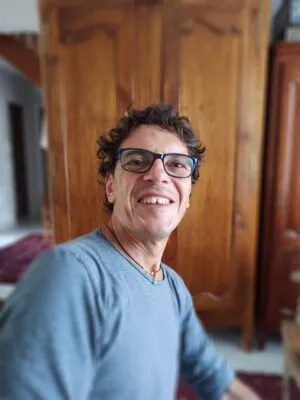
From November to February, the terrains empty and your set of three boules often stays at the bottom of the bag. Jean-François, our FFPJP-qualified coach and certified mental performance coach, advises the opposite: keep your boules in plain sight at home. In the motivation module of our programme, he explains that they remind you of the commitment you have made to yourself.
The table below shows what home can give you, and what has to wait until you are back on the terrain.
| What you work on | At home | On the terrain |
|---|---|---|
| The swing and the release | Yes, without a boule, filming yourself | Yes, with a boule and a target |
| Hands, wrists and body | Yes: warm-up and light strengthening | The warm-up before you play |
| Breathing and visualisation | Yes, every day | Yes, in your routine before every boule |
| Reading the terrain | No | Yes, at every end |
| Judging the distance when pointing and the strike when shooting | No | Yes |
| The pressure of a real game | No | Yes, in games and competitions |
So pointing and shooting are practised on the terrain: we cover these drills in detail in our guide to improving your petanque. This article deals with everything else: what players can work on indoors, then how to keep up your petanque practice in winter despite the cold, and where to find an indoor terrain.
Which petanque exercises can you do at home, without a terrain?
The petanque exercises you can do at home work on your throw, your body and your mind. None of them needs a partner or involves throwing a steel boule inside the house, and each one takes just a few minutes. Here are five, each explained below:
- A throw without a boule: your swing, repeated with no boule and filmed on your phone.
- A warm-up for your hands and wrists.
- Light strengthening, with two dumbbells and a resistance band.
- Coherent breathing, a simple exercise to calm your body.
- Visualisation, by watching champions play.
How can you work on your throw without throwing a boule?
You practise your throw with no boule in your hand. Standing as if you were in the circle, go through your swing, the to-and-fro of your throwing arm, slowly at first, then at your normal pace. To picture the right movement, Jean-François offers a simple image in our programme: “a ball attached to a string, like a pendulum”. Your arm plays the part of the string, and the boule that of the ball.
Then film yourself on your phone, from the side and then from the front. Jean-François is firm about this: filming yourself helps you become aware of your whole throwing technique, because the screen shows what you can’t feel. On the video, check four points:
- From the side, your arm is fully straight at the bottom of the swing, like the string under the weight of the ball.
- From the front, your throwing arm stays in line with the target, as it swings back and as it comes through.
- Still from the front, your other arm, held away from your body, balances you like a tightrope walker, and your upper body doesn’t turn to the side.
- From start to finish, your eyes stay fixed on the target.
Jean-François also reminds us that practice should repeat what you will do in competition. So even in the living room, set your feet as you would in the circle.
How do you keep your hands and wrists ready to play?
A few minutes of warm-up and some light strengthening, both easy to do at home, are enough to keep your hands and wrists ready to play. They are the first to stiffen in the cold, and they are the ones that decide your release.
In the “Physical preparation” module of our programme, Jean-François’s warm-up routine starts, fittingly, with the hands. Here are two of its exercises, to do before you practise your swing as well as before every game:
- Rub your hands together Briskly work your palms, the backs of your hands and your fingers, especially in cold weather; one to two minutes is enough to warm them up.
- Rotate your wrists Hold one hand in the other and make 10 circles in one direction, then 10 in the other.
For the rest of the body, in the same module, Jean-François sets out a strengthening circuit designed for home, “with little equipment”: two dumbbells and a resistance band are enough. He advises working the upper body one day and the lower body another, and giving each muscle group at least 48 hours’ rest. Always adapt the effort to your fitness, and ask your doctor’s advice if you feel any pain or have any doubt.
How do you train your mental game at home?
Mental training for petanque works very well at home: belly breathing teaches you to calm your body before you play, and watching champions play feeds your visualisation (seeing the right movement in your mind) and your automatic movements. These are the two exercises we recommend first, because they need neither a terrain nor any equipment.
In his free video Mastering my breathing in petanque (opens in a new tab) (in French), Jean-François shows how to breathe through the nose and into the belly: the belly swells as you breathe in and draws in as you breathe out, while the shoulders stay still. From this he builds a coherent breathing exercise: you breathe in for 5 seconds, swelling the belly, then breathe out for 5 seconds, for 5 minutes, three times a day. On the terrain, this breath then sets the rhythm of each boule: as you breathe in, you prepare the movement; as you breathe out, you carry it out.
Visualisation, meanwhile, can be practised in front of a screen. In the “Mental preparation” module of our programme, Jean-François encourages you to watch the great champions play. He also notes that time away from the terrain, after an injury for instance, lends itself well to visualisation: winter is one such time.
You’ll find champions’ games on our YouTube channel: it had 335 videos as of 4 November 2026, including games from the 2026 Mondial de Fréjus. To find out what to look for in a great shooter, read our article on the petanque World Championships.
These exercises are a first step; the complete method is in our programme. The “Physical preparation” and “Mental preparation” modules of our training programme are the easiest to follow from your living room. The first contains the warm-up routine and the complete strengthening circuit; the second covers motivation, goals, performance routines and visualisation.
How long should you practise each day to become consistent?
To become consistent, it is better to practise a little, but every day. As Jean-François writes about breathing, five minutes of daily practice are worth more than 13 minutes every now and then. We apply the same principle to your throw and your body.
Under a training video, a player asked how many hours a day you need to practise to become consistent. There is no magic number. Instead, Jean-François recommends choosing a length of time that is realistic, practical, repeatable and, above all, enjoyable. The best training is the training you will keep up all winter.
In his breathing video, Jean-François also advises practising for at least three weeks so that the exercise becomes a routine: this is a coach’s advice, not a guaranteed timescale.
Here is how to fit the five exercises in this article into your week:
| Exercise | When | How long |
|---|---|---|
| Coherent breathing | Every day, three times | 5 minutes per session |
| Your swing without a boule | Every day, filming yourself from time to time | A few minutes |
| Hands and wrists | Before practising your swing and before every game | One to two minutes for the hands, then 10 circles in each direction |
| Strengthening | The upper body one day, the lower body another | To suit your fitness, with 48 hours’ rest per muscle group |
| Visualisation | Whenever you have the time | One game between champions, watched closely |
What equipment do you need to practise petanque at home?
The petanque training equipment you need at home fits in a cupboard: a phone to film yourself, two dumbbells and a resistance band for strengthening, and your own boules, kept for the garden. No shooting device or target mat is essential for the winter.
| Equipment | Where to use it | What it gives you |
|---|---|---|
| Your phone | In the living room or the garden | Seeing your throw from the side and the front |
| Two dumbbells and a resistance band | In the living room | Strengthening the upper and lower body |
| A circle drawn on the ground | In the garden | Finding your footing again, as in a game |
| Your own boules | In the garden, never in the house | Keeping the weight and feel of your game |
If you have a garden, draw a circle 35 to 50 cm in diameter, more than 1 metre from any obstacle, as the official FIPJP rules (opens in a new tab) (in French) require for a drawn circle. Play with your own boules there, the ones you use in your games: it is their weight and feel that your hand needs to remember. Throw with both feet inside the circle, and don’t leave it until the boule has touched the ground: the rules of petanque require this in a game, so you might as well get into the habit in practice.
To test yourself in the garden, apply the rule of Jean-François’s shooting drills: a distance only counts as passed after three successful shots in a row. Start at 5 metres, and only move back once you have passed that distance, up to 10 metres if you have the room. Inside the house, on the other hand, you work on your throw without a boule, and a steel boule has no place there.
How do you keep the feel in your hands when it’s cold?
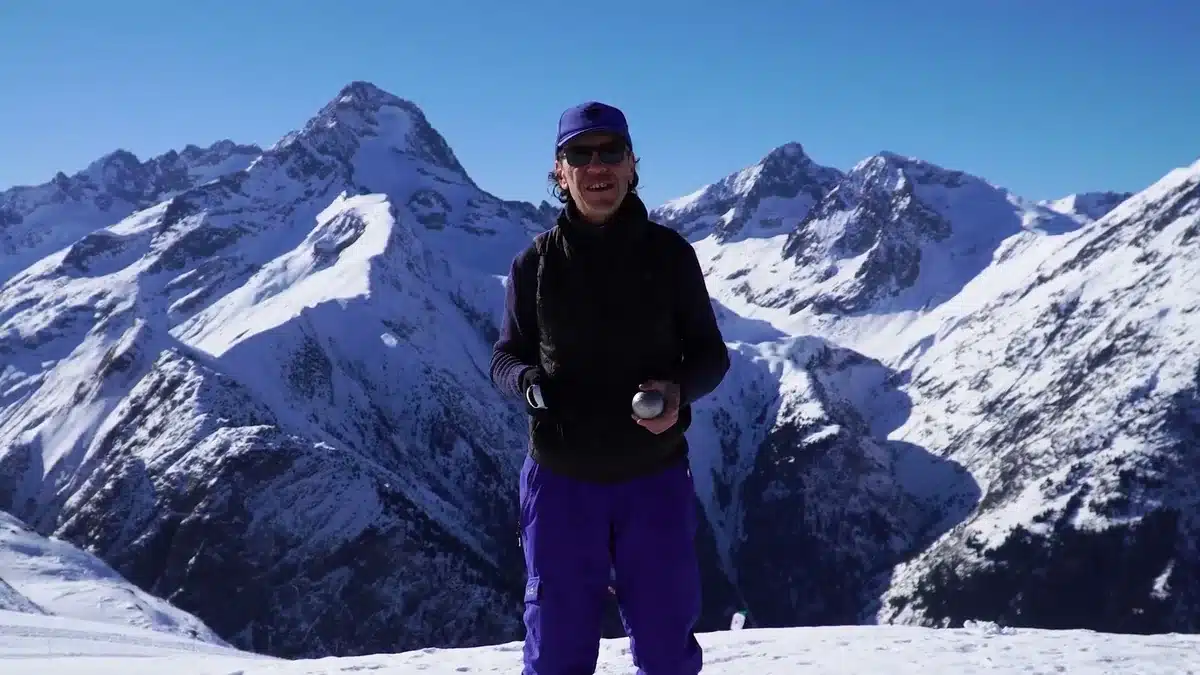
To keep the feel in your hands when it’s cold, Jean-François recommends four solutions: a thin glove liner on the hand you don’t throw with, hand warmers, a sleeveless heated gilet and boules warmed up the night before. He presents them in his video Performing at petanque in winter (opens in a new tab) (in French).
These solutions answer what players dread in winter: frozen hands, cold boules and no feel at all. Here is each one in detail:
- The glove liner Choose a thin one and wear it on your other hand, never on the hand you throw with.
- Hand warmers Disposable ones claim around six hours of heat, and USB-rechargeable ones last all day.
- The heated gilet Choose a sleeveless one so your arm keeps its full mobility, and add heated insoles rather than wearing a full suit.
- Warmed boules Put them on the radiator the night before, then wash them in hot water on site whenever possible.
The glove liner stays on the other hand for a simple reason: with a glove on, the boule slips at the release, as a player in Toulouse told ICI (Radio France) (opens in a new tab) (in French) in January 2024.
These solutions aren’t just for winter. In the same video, Jean-François points out that championships start early in the season, in March and April, when it is still chilly. Before every game, add the hand warm-up described above: it finishes waking up your fingers.
Where can you play petanque in winter?
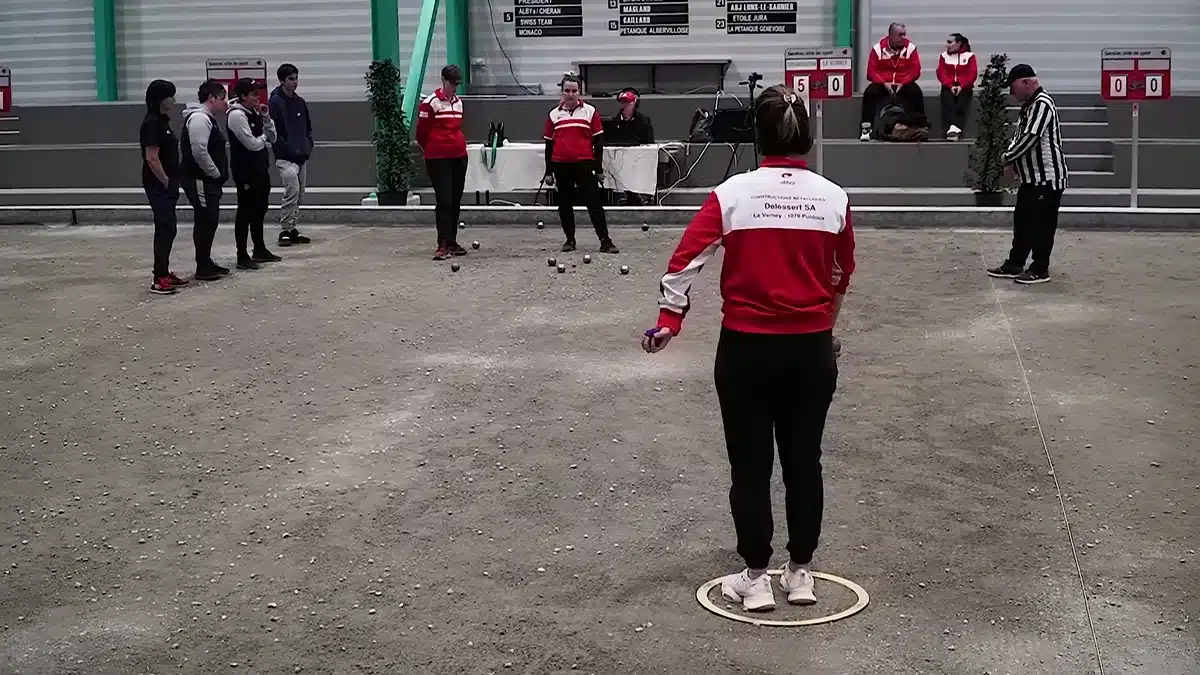
In winter, petanque is played in an indoor boulodrome, often run by a club or a local council, where licensed players meet up when the outdoor terrains empty. To find one near you, the simplest way is to contact the clubs in your area and ask them on what terms you can play there.
These venues change a player’s winter: you keep playing on a real terrain, judging your distance when pointing and enjoying a proper game. In January 2024, ICI (Radio France) (opens in a new tab) (in French) described the one in Toulouse, open even on Sundays, where one regular comes to play every day, from 2 pm to 7 pm.
No indoor boulodrome near you? Keep the dry days for playing outdoors with the solutions against the cold, and the rest of the week for the exercises you can do at home.
How can you get better at petanque over the winter?
To get better at petanque over the winter, set yourself a specific goal for the spring, prepare for it every week at home, then return to the terrain gradually. The first championships come round quickly: Jean-François places them in March and April, and now is the time to prepare for them.
In winter, you train what summer leaves no time to work on. A useful goal can be measured and has a deadline: a score to reach in precision shooting, the event presented in our guide to precision shooting, qualifying for your local championship, or simply a routine kept up all winter. In the goal-setting module of our programme, Jean-François points out that no performance is possible without a minimum amount of preparation time, which nothing can shorten: winter gives you exactly that time.
When you get back outside, start by working on what home cannot replace. Spend your first sessions learning to read the terrains again, now that rain and frost have changed them, then getting back your distance when pointing and your strike when shooting. Our technique articles will help you with this.
After that, play games to get used to the pressure again. Start every outing with the hand and wrist warm-up, and lengthen your sessions little by little rather than playing all day on the first fine weekend.
If you’d like your throw corrected on the terrain, we welcome players on coaching courses in Nantes and Geneva: find out more about our coaching course.
Frequently asked questions
Are there petanque exercises in PDF form?
Yes: clubs and federations publish sheets of petanque exercises in PDF form, most often for beginners. Our exercises, on the other hand, are on video in our training programme, because a movement is easier to understand when you see it done.
Can you play petanque indoors?
Yes, in two ways: in an indoor boulodrome, with your real boules, or at home with an indoor petanque set, whose soft boules are designed not to damage anything. This kind of set is fun for the whole family, and it is one of our gift ideas for petanque players. Its boules, however, have neither the weight nor the feel of competition boules: it won’t help you fine-tune your throw. For that, nothing beats your own boules, chosen to fit your hand, as our guide to choosing petanque boules explains.
Do you need a device to practise shooting in petanque?
Not at all: no shooting practice device is essential. An accessory such as a target mat or two boules joined by a cable helps you test yourself outdoors, nothing more. The shooting drills in our guide to improving your petanque can be set up with an old tyre, a plank and your own boules.
Can you work on your shooting at home?
Partly: your swing without a boule and your release matter as much to a shooter as to a pointer, but the strike itself can only be fine-tuned on the terrain. As Jean-François reminds us in our programme, shooting doesn’t come naturally, and you need to practise regularly so that the movement becomes as automatic as possible. On the terrain, he advises working on your release from the warm-up onwards, shooting a few boules from about 5 metres first, then gradually increasing the distance.
Preparing for the season from home
Petanque training at home won’t turn you into a champion in one winter, but it will help you approach the season with a more consistent throw, hands that are ready and a calmer mind. A few minutes a day is enough, as long as you stick with it until the spring. To go further, our training programme covers physical preparation and mental preparation on video: you follow them at your own pace from home, until you are back on the terrain enjoying our wonderful game.
This programme is not sports instruction within the meaning of the French Sports Code. It is informal educational support, designed to enrich your personal practice of petanque, with no individual supervision and no qualification awarded.
Your next read
How to progress in petanque: training, technique and the mental game
Find the pointing and shooting drills to take back to the terrain in the spring, and the routine before every boule.